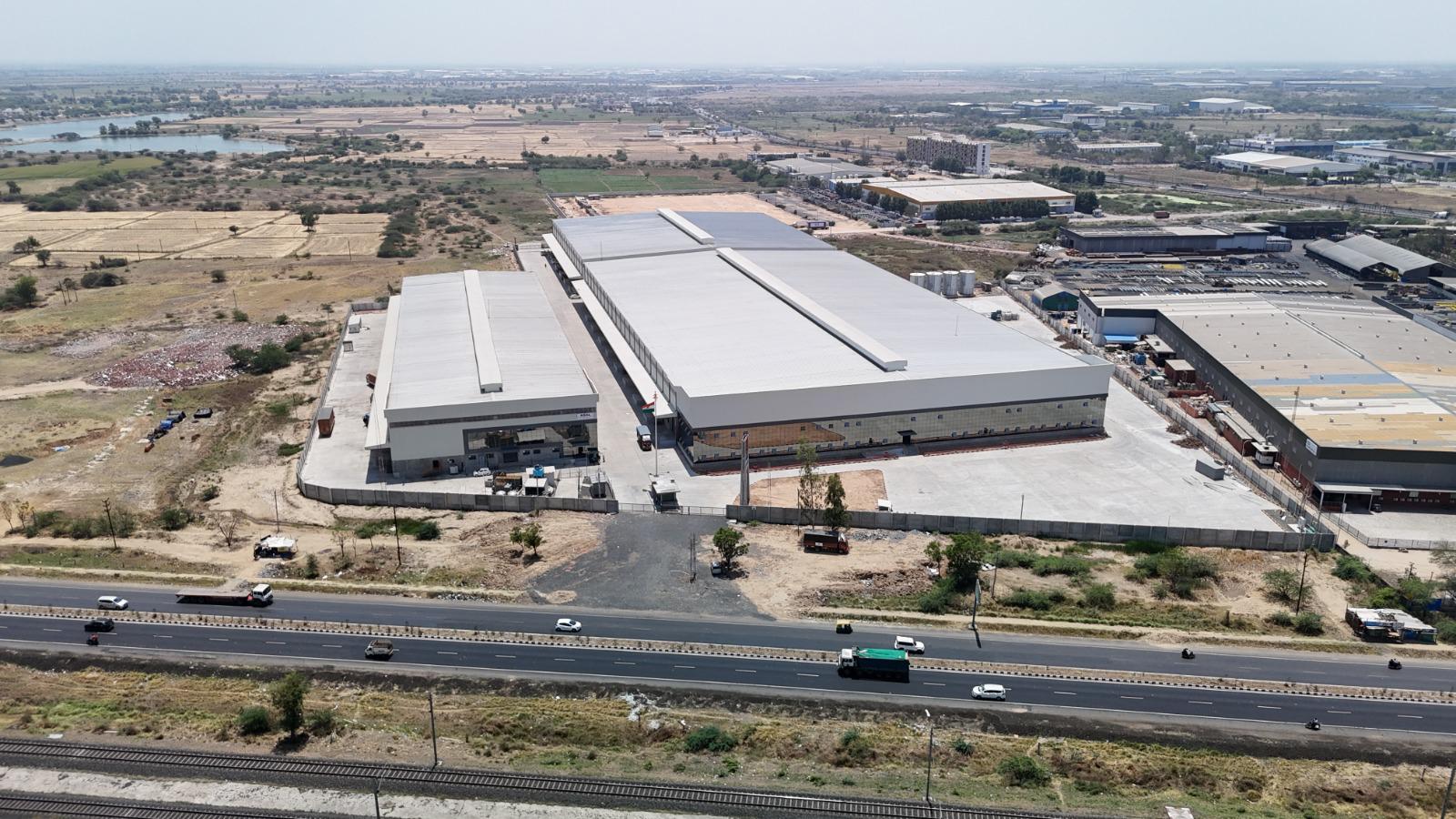
India’s industrial real estate story is entering a new and more balanced phase. While Tier-I cities such as Mumbai, Delhi-NCR, Bengaluru, Chennai, Pune, and Ahmedabad remain the backbone of the sector, new industrial corridors in Tier-II and Tier-III cities are beginning to share the spotlight.
At the VCCircle Real Asset Investment Summit 2025, Nirav Kothary, Director, Godwitt Construction, shared how this shift is reshaping the industry. India’s manufacturing expansion, supported by the Production-Linked Incentive (PLI) scheme, the National Industrial Corridor Programme, and the China-plus-one strategy, is driving a wider spread of demand and investment across states. Ready-built factories on lease are becoming the preferred model, allowing companies to focus resources on technology, people, and production rather than land ownership.
Tier-I Cities: The Foundation of Industrial Growth
Tier-I markets continue to anchor India’s industrial and logistics growth. They offer world-class infrastructure, established developer ecosystems, and deep institutional investor confidence. Their connectivity to ports, consumption centers, and talent pools keeps them critical to supply chains.
These cities also lead in adopting new technologies such as automation, ASRS systems, and sustainable construction, setting the standard for newer markets to follow. Far from losing relevance, Tier-I hubs will remain the operational and financial base of India’s industrial economy.
Tier-II and Tier-III: The Expanding Frontier
At the same time, emerging cities are becoming important extensions of the industrial network. Regions such as Vadodara, Bharuch, Surat, Hosur, Coimbatore, and Sri City are witnessing accelerated activity, supported by better highways, freight corridors, and proactive state policies.
These locations offer lower land costs, easier approvals, and growing linkages to supplier ecosystems. For occupiers, they provide scale and proximity to labor pools. For investors, they offer portfolio diversification beyond Tier-I markets, where land valuations and rentals have already matured.
The opportunity in these cities is real but must be approached carefully. Sustainable growth depends on locating projects within established industrial belts to ensure consistent demand and mitigate re-leasing risk.
A More Specialized Industrial Landscape
India’s industrial real estate is also becoming more specialized. Plug-and-play manufacturing spaces are shortening time-to-production for occupiers. Cold-chain infrastructure is evolving with automated storage and retrieval systems for sectors like food, pharmaceuticals, and FMCG. Worker housing is emerging as an essential part of the ecosystem, with safe and affordable accommodation improving retention and productivity.
Together, these developments are modernizing the sector and paving the way for lower logistics costs, higher efficiency, and more inclusive growth.
Godwitt Construction: Bridging Both Markets
Godwitt Construction, a developer focused entirely on industrial real estate, operates across this evolving landscape.
- SOKO by Godwitt builds plug-and-play manufacturing and warehousing facilities using advanced precast construction for rapid delivery.
- REIZÅŒ by Godwitt develops temperature-controlled storage, including India’s first vertical ASRS cold-storage facility available on lease in Dholasan, Gujarat.
- IKOI by Godwitt provides rental housing for industrial workers, offering dignified, affordable living close to workplaces.
With projects across Gujarat and Maharashtra, Godwitt integrates manufacturing, storage, and workforce infrastructure, bridging the reliability of Tier-I markets with the scalability of Tier-II and Tier-III hubs.
The Road Ahead
India’s industrial real estate is no longer defined by geography but by capability. Tier-I cities will continue to lead with stability and scale, while Tier-II and Tier-III cities will add flexibility and reach. Together, they form a more resilient and distributed industrial network that reflects the country’s next decade of economic growth.
Developers and investors who view the landscape as complementary rather than competitive will be best placed to shape this future.
No VCCircle journalist was involved in the creation/production of this content.
Insights Focus is a marketing initiative for sponsored posts. No VCCircle journalist was involved in the creation of this content.