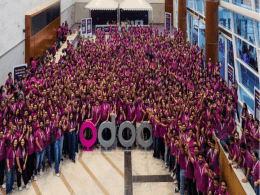
At the recent VCCircle Limited Partners Summit in Dubai, Anoop Nair, COO of Interpolitan Money, offered a closer look at how cross-border capital can drive growth and innovation. His panel discussion, “The Capital Silk Route: UAE-India as Gateways to Asia & Africa,” explored not just opportunities but the structural mechanics behind investment flows.
- Panellists:
◦ Kunal Jain, Promoter, SPG Family Office
◦ Eshan Kaul, Global Investor Head, Sinarmas Technology
- Moderator:
◦ Dilasha Seth, Senior Assistant Editor, VCCircle
- Key insights from Anoop:
◦ How capital moves efficiently across borders and scales at the right time
◦ The importance of regulatory frameworks and financial structures in cross-border investment
◦ How strategic partnerships between the UAE and India are reshaping regional capital flows
Building on these insights from the summit, Anoop examines how the UAE–India corridor is evolving - not just in headline deals or trade volumes, but in the regulatory frameworks, capital structures, and cross-border mechanisms that are redefining how growth and investment are realised.
From capital controls to capital connectivity in the UAE–India corridor
The UAE–India corridor is often discussed through the lens of trade volumes and headline investment announcements. However, the real transformation underway is structural rather than purely transactional. It is about how capital is permitted to move across jurisdictions, and how effectively it can be deployed at scale.
India remains a capital-controlled economy with regulatory frameworks governing foreign exchange, ODI, OPI, and FEMA, prioritising macroeconomic stability. Yet stability no longer needs to come at the expense of global competitiveness. Recent reforms signal a clear shift in intent - from restriction to regulation, from control to calibrated openness.
UAE’s strategic role in facilitating cross-border investments
Alongside India’s reforms, the UAE has become its natural partner for global engagement, offering speed, flexibility, and connectivity through accessible fund structures, Special Purpose Vehicles (SPVs), and investor-friendly formations.
UAE-to-India foreign direct investment is estimated at approximately $20 billion, while Indian investment into the UAE ranges between $8 and $10 billion. This is not a one-way flow of capital, but a bilateral relationship spanning infrastructure, financial services, and technology.
Banking and private credit: Addressing friction in the corridor
Banking remains the key friction point in the corridor, as traditional cross-border rails are slow, conservative, and ill-suited to modern financing - particularly in alternative and private credit markets.
At Interpolitan Money, we emphasise the three pillars of Forex, Filings, and Flows, which must operate in harmony to maintain economic balance. Mismanaged FX, regulatory gaps, or complex payment pipelines can quickly erode returns.
The corridor’s next growth phase will depend more on execution than policy. Digital account access, compliant capital routing, embedded FX hedging, and balance-sheet protection across jurisdictions are essential, making alternative financial infrastructure indispensable for sustaining returns and enabling cross-border private credit expansion.
Rupee internationalisation and the future of capital
Private credit represents both opportunity and risk. It offers higher yields in a constrained global environment, but it demands regulatory fluency, disciplined structuring, and active risk management. Indian regulators have approached this space cautiously, liberalising incrementally, with clear guardrails.
This measured approach aligns with broader ambitions around rupee internationalisation. Offshore INR accounts, trade settlement flexibility, and currency market depth are not abstract policy goals; they are requirements for sustainable cross-border capital integration.
The internationalisation of the Rupee will ultimately define the maturity of the UAE–India corridor.
GIFT City: a platform for globalisation and investment growth
GIFT City is a clear example of India’s growing financial strength. Built as a financial hub in India that can compete globally, it allows Indian businesses to expand internationally without moving their operations abroad. With tax benefits, clear regulations, and stable long-term policies, GIFT City is becoming a strong alternative to traditional international financial centres.
In the past, many Indian founders formed offshore businesses due to the valuation advantages and challenges at home. The repeal of the Angel Tax in 2024 has removed key regulatory hurdles, encouraging companies to return, stay and grow in India.
Looking ahead to 2026 and beyond
The future of the UAE–India corridor is not merely transactional. It is structural. Those who understand both regulatory intent and operational reality will be best positioned to convert controlled capital into connected capital.
As reforms deepen and financial infrastructure evolves, the corridor will increasingly reward participants who prioritise compliance, transparency, and long-term execution over short-term arbitrage. In that evolution lies one of the most compelling cross-border growth stories of the decade and will reshape how India participates in global markets.
About Anoop Nair
Anoop Nair, COO of Interpolitan Money, is a seasoned growth leader with over 23 years of experience in financial services, specialising in global transactional banking. His career includes leadership roles at Barclays, Deutsche Bank, and Citigroup within Corporate & Investment Banking, where he played a pivotal role in delivering marquee payment solutions that supported India’s FinTech evolution. Deeply passionate about cross-border banking, he combines institutional expertise with entrepreneurial drive to help shape innovative financial solutions.
No VCCircle journalist was involved in the creation/production of this content.
Insights Focus is a marketing initiative for sponsored posts. No VCCircle journalist was involved in the creation of this content.