When CapitalG, Sequoia, and BlackRock all backed Odoo, it's worth asking what they saw and what it means for how India's founders should think about operational infrastructure.
In today’s funding environment, investors are no longer just backing growth; they are backing companies that create solutions, seek growth, focus on how efficiently that growth is sustained, and achieve operational efficiencies without burning themselves out.
The new necessity for a business is operational smoothness. Clean financials, automated processes, and unified dashboards make founders who approach funding discussions very different from those who do not. And in November 2024, the sharpest investors in the world affirmed what many in India's business sector already knew: software that makes it easier for businesses to handle their finances, personnel,
inventory, and clients in one location is valuable.
The Bet the Market Missed
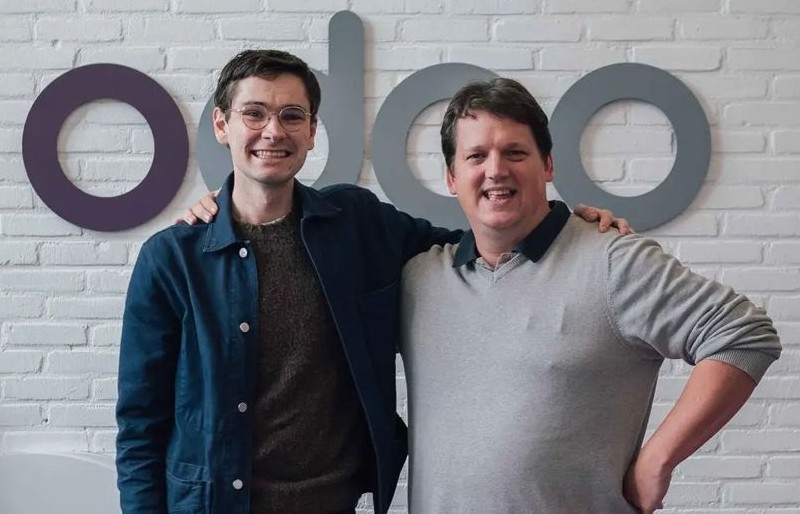
Founded in 2002 by Fabien Pinckaers, Odoo has spent twenty years creating the most extensively used open-source business software in the world. Pinckaers began with his first office on a Belgian farm, using everything he could afford. The company has never chased headlines. It has simply compounded.
BlackRock, Mubadala Investment Company, HarbourVest Partners, AVP, Alkeon Capital, and CapitalG - Alphabet's independent growth fund and the same parent company behind Google and Sequoia Capital led the €500 million secondary transaction ($527 million) that Odoo announced in November 2024. Odoo's worth increased from €3.2 billion to €5 billion ($5.26 billion) as a result of the deal. Odoo's worth surpassed €7 billion in January 2026 when AVP and Alkeon completed another €60 million secondary deal, demonstrating ongoing investor confidence.
What makes this extraordinary is what came before it. 2014 saw Odoo's most recent primary capital raising, a $10 million Series B. The business continued to be financially profitable, grew organically at a pace of 40% annually, and required no outside funding for ten years. It currently serves well over 15 million people, exceeded €650 million in billings in 2025, and aims to reach €1 billion by 2027.
“Fabien and his team have established a unique business.” - Alex Nichols, Partner, CapitalG (Alphabet Inc).
One Platform. Every Business Function.
Odoo is an open-source business management platform that combines over 80 modular apps for CRM, inventory, finance, manufacturing, HR, and e-commerce. The majority of the 63 million SMEs in India's market still rely on guessing using a combination of spreadsheets and disparate platforms, which leaves a significant gap between their current operations and what is required to be investor-ready. Compared to 12 - 24 months with other major competitors in the market, Odoo implementations usually take 2-4 months and are up to 65% less expensive. The law now mandates the digitization of activities due to the increasing e-invoicing requirements and the growing stringency of GST compliance. That is the structural need that Alphabet and Sequoia backed.
Fabien Pinckaers relocated to India in 2022 to personally lead expansion and has never sold a single personal share across 22 years of building the business. In a market where founders often declare their commitment but seldom prove it, this move sends a significant message.
Why India & Why Now?
India is home to over 63 million small and medium-sized enterprises and the overwhelming majority still run on spreadsheets, WhatsApp groups, and disconnected systems. This patchwork creates what can only be called operational debt: fragmented data, unauditable processes, and reporting that tells investors very little about what is actually happening inside a business.
The pressure to change the status quo is no longer coming from ambition alone; it is coming from regulation. As GST compliance tightens and e-invoicing mandates expand, digitizing operations is becoming a legal necessity, not a growth strategy. McKinsey, Bain, and The Ken have each separately identified India's SME digitization shift as one of the most significant economic transitions currently underway in Asia. The market is moving. The only question is which businesses adapt to the shift and which ones lag.
The takeaway from Odoo’s deal!
Odoo's $500 million funding was based on a company that had proven itself over time rather than on its potential for the future. Long before outside funding arrived, the company had found solutions for scalability and efficiency, with over 15 million customers, €650 million in billings, and steady profitability. Odoo's success wasn't defined by the investment; rather, it was enhanced by it, allowing the business to grow more quickly while maintaining its foundation in an established model.
It was this that changed things. Investors supported a business that had already streamlined operations at scale by integrating HR, inventories, CRM, and finance. This kind of foundation is growing crucial as companies are under more and more pressure to maintain compliance and function clearly. The current potential for businesses that still manage operations across various tools is not only to expand but also to build upon systems that can effectively facilitate that expansion.
“Investors don’t just back ideas anymore. They back companies that have already figured out how to run.”