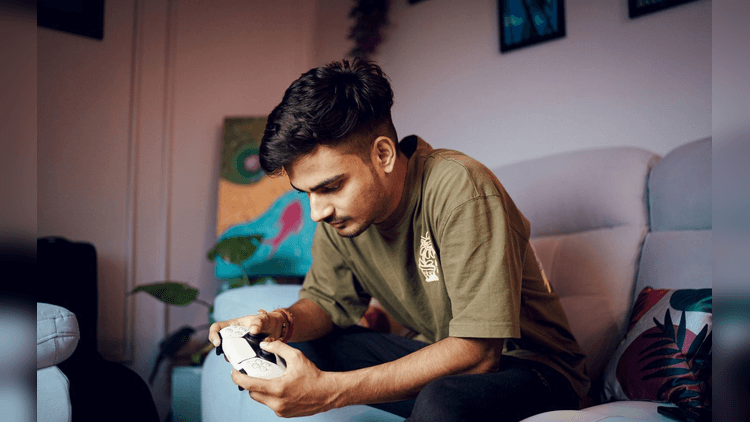
While cryptocurrency and trading get a significant amount of press associated with Web3 opportunities in India, one opportunity that has not seen as much movement, despite being very real, exists in gaming. There are almost 600 million gamers in India, according to Digital in Asia, and blockchain technology could provide a new way for those players to own digital items, support game developers and participate in virtual economies.
It's true that, for the most part, the discussions around blockchain are still focused on the price of USDT to INR and the trading of cryptocurrencies on exchanges like Binance, but the discussion of blockchain's viability and usefulness in other situations is growing. Being used as the underlying technology that would give gamers control over in-game assets and creating new opportunities for the developers of video games are just two ways that blockchain might become part of the gaming experience itself.
With so many gamers in India, there is a huge audience that could make experiments in this field significant. Whether or not blockchain technology provides a real opportunity to enhance the experience here will depend on whether Web3 games are able to take off and deliver enjoyable experiences to players, and the utility for digital ownership will follow. It is unlikely that many players will find the possibility of speculating on tokens as a feature that would make a game worthwhile on its own.
Why Is India Such an Important Market for Blockchain Gaming?
India is an important market for blockchain gaming for a couple of reasons, but one of the big ones is that it is one of the world's biggest gaming markets. According to Digital in Asia, India has the second-largest player base in the world with 591 million gamers, with only China being ahead of it. The same article suggests that the number will rise to 724 million by 2029.
Having such a large-scale market matters, because it means there is a much greater pool of people familiar with digital gaming environments for blockchain gaming to draw on. While gamers can have very different digital habits, there are lots of gamers who love to collect characters, customize the avatars they use, unlock equipment and to progress through the virtual worlds they game in.
Blockchain gaming could build on these already existing habits. Rather than trying to reinvent the wheel and introduce digital assets as a separate financial product that gamers are unfamiliar with, blockchain games could allow players to earn or collect items in-game whose ownership is verified on a blockchain, and to use supported items in other gaming environments other than the ones that they were first earned or purchased.
The gaming audience in India is also heavily mobile-first, with 95% of gamers in the country playing on mobile devices. This means that the audience for gaming and blockchain gaming is not restricted to technology hubs, and as affordable smartphones become more commonplace, the gaming audience is likely to continue to grow.
But, importantly, a large gaming audience does not mean that there is a large audience for blockchain gaming. Blockchain gaming would need to provide something different that players are actually interested in to be successful.
How Could Blockchain Change Ownership of In-Game Assets?
In-game assets that are tied to blockchain-based ownership would be recorded as tokens on digital blockchain ledgers. This would mean that they could be traded or transferred between wallets or even listed on marketplaces; it would also allow for verifiable records of ownership to exist for these assets.
As it works presently for most games, players can use virtual economies in games to purchase in-game assets, as well as digital markets or shopfronts that sell skins or characters for real money. But any items or skins that players receive, however they get them, are subject to the game publisher's rules in terms of how they are used, including selling or trading.
With a blockchain-based ownership model, players would own the items they purchase in games directly and would be able to do what they want with them in terms of selling or trading them. The developers of games would still need to recognize these digital assets for them to be used within the virtual game worlds, but blockchain ownership would make it much easier to trade or sell these assets.
What Challenges Could Prevent Web3 Gaming From Taking Off?
One of the biggest challenges that Web3 gaming faces is its complexity. The technology must be made useful, while at the same time not introducing excess technological complexity. Gamers should not need to know anything about secure wallets, private keys, token exchanges or network fees in order to play games. Gamers are not looking for complications; they are looking for entertainment, and Web3 must acknowledge this.
In India, another important factor is regulation. India recently changed its laws around online money games with its Promotion and Regulation of Online Gaming Act, 2025, which, while not directly relevant, shows that Indian regulators are unafraid to pass laws limiting gaming.
The costs of Web3 gaming are important to consider as well. Any games that could present a large number of transactions would require the right sort of infrastructure to keep this affordable. There are also concerns of security that developers would need to consider.
Author: Liam Clarke
Liam is a content writer from Australia. He has been writing content for years and has a flexible style that allows him to write content to suit many topics. When he isn't writing content, he's watching classic films and providing enrichment for his cat.