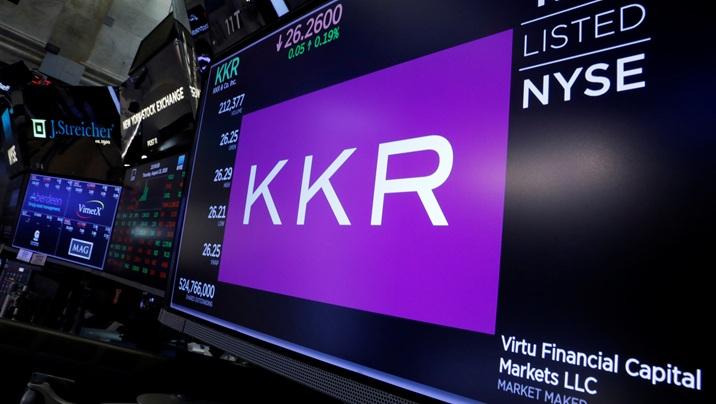
KKR's second-quarter profit beat market expectations on Thursday, as it raked in higher fees from managing a growing stack of client money and cashed in on a bumper run of asset sales.
Many private equity firms have struggled in recent years, as interest rates rose, to maintain their traditional model of buying companies, extracting savings and selling them profitably.
But KKR, which made its name as a buyout pioneer and expanded into other areas including credit, closed a roster of transactions in the second quarter, including the final sale of Japanese chip company Kokusai Electric and its stake in software company OneStream.
Evercore analyst Glenn Schorr said the sales were "further evidence of the bifurcation in the sponsor market between large- and mid-cap, with bigger deals getting done more readily".
"The second quarter was the largest monetization quarter in our history. We have tremendous confidence in our forward monetization pipeline," finance chief Robert Lewin said.
Fees from managing money, which KKR earns regardless of how investments perform, jumped 25.5% to $1.25 billion. Adjusted net income of $1.63 per share comfortably beat a $1.41 estimate from an LSEG analyst poll.
Co-CEO Scott Nuttall said AI infrastructure and the related real estate and credit deals were a huge opportunity. "We're focused not so much on investing in what's going to be the next chip company or the next LLM," he said, referring to large language models.
Shares fell 1.7%. They had shed 22% so far this year as of the last close, in line with other alternative asset managers.
Inflows of $34 billion was driven by the real assets business that houses KKR's infrastructure strategies. Private equity brought in $9.56 billion.
A total $9.1 billion to credit was a roughly 36% slump from a year ago. But Nuttall said he expects a record year for fundraising in credit, which remains the biggest chunk of its $796 billion under management.
Net realized performance income, which reflects profits from divestments and is known as carried interest, almost doubled from the previous year to $211.9 million.
The traditional private equity portfolio returned a gross 4%, while composites for leveraged credit and private credit showed returns of 2% and 1%, respectively, having been negative in the previous quarter.
In June, KKR agreed to buy French power firm EDF'S North American renewable business for $4.2 billion, aiming to capitalize on rising power demand for artificial intelligence.