A retail partner wants a deck by Friday. Last season's best product shots are not on the shared drive; they are on Instagram, on the brand's grid and on creators' accounts. So the founder asks the growth lead: can we just download them?
Two questions come first. Which ones? And do we have it in writing?
India's Copyright Act answers both. No how-to guide on the first page of results we pulled for this search mentions it.
Two piles of photos, two owners
Section 2(c) of the Act counts a photograph as an artistic work "whether or not any such work possesses artistic quality", serum-bottle flat-lays included. Section 2(d)(iv) names the author, "the person taking the photograph", and section 17 makes the author "the first owner of the copyright therein".
That default splits the deck in two.
Pile one is the brand's own posts. If the brand paid for the shoot, read section 17(b): for a photograph taken "for valuable consideration at the instance of any person", that person is first owner "in the absence of any agreement to the contrary". The contract decides.
Pile two is creators' posts. A creator's organic post is hers: she took the photograph, so she is author and first owner. Section 14(c) gives the owner the right to reproduce it, including "the storing of it in any medium by electronic or other means". Section 52(1)(a)(i) excuses fair dealing for "private or personal use, including research". Note the word personal.
Good for screens, small for paper
We saved five photos through fastdl's free path from public NASA, NOAA and NASA Earth posts. JPEGs, at the size Instagram stores: 1440 x 1800 for a 4:5 NASA portrait, 1440 x 960 for the second image of that post, 1350 x 1350 and 1334 x 1334 for NOAA squares.
For a pitch deck, a marketplace listing or a feed ad, that is plenty.
Paper is another matter. Printivity, a print shop, says "For print, documents with a 300 PPI resolution are ideal" and sizes a letter page, 8.5 x 11 inches, at 2550 x 3300 pixels. At that rate the NASA file prints at 4.8 x 6.0 inches, about 31% of the page's pixels. The NOAA square makes 4.5 inches a side. Postcards.
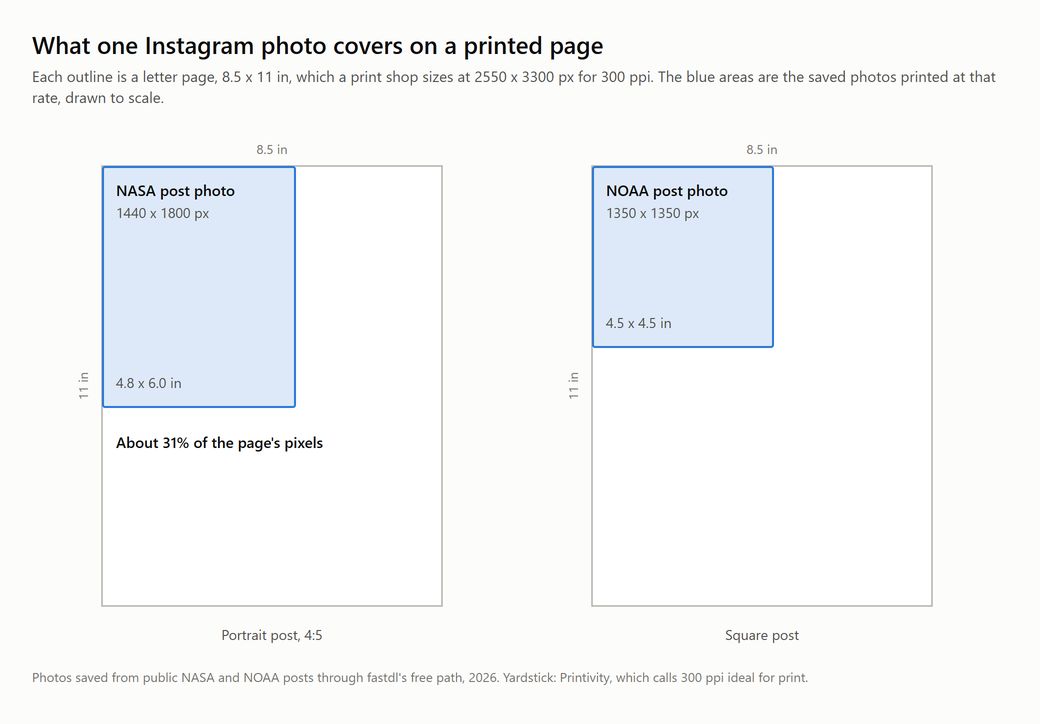
Drawn to scale from two post photos saved through fastdl from public NASA and NOAA accounts in 2026. The 300 ppi yardstick is Printivity's.
The ceiling is Instagram's. Upleap's guide puts it plainly: "Instagram does compress images when they are uploaded, so downloaded photos may not match the original file quality". For print, chase the original file.
The routes out of Instagram, ranked for a brand library
Ranked for one job: the brand's own posts plus creator posts it has permission to reuse, bound for screens.
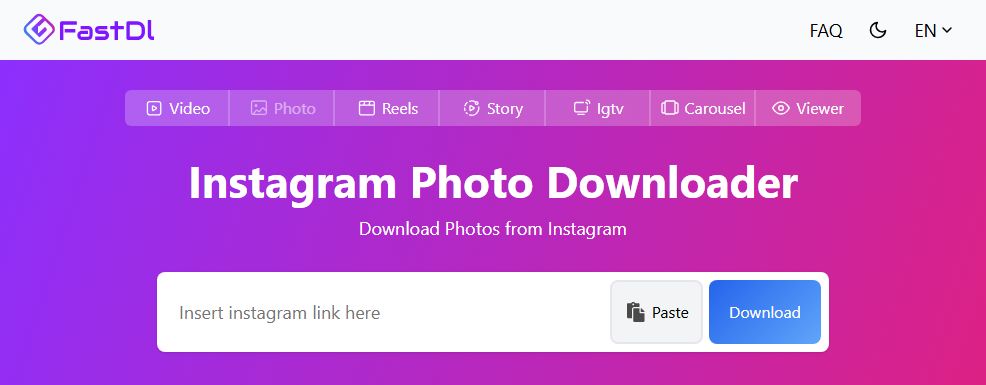
fastdl's photo page above the fold is one link field with Paste and Download. The header holds FAQ, a theme switch and the language menu, and no sign-in button.
1. fastdl. The one route that covers both piles. A public post from the brand's grid or a creator's account goes into an instagram downloader such as fastdl, and JPEGs come out; the five files above came through its free path. In five measured runs, no login or sign-up form appeared before the download links. Public posts only, by its own FAQ. Its terms count "the company, or other legal entity" as a user, with no personal-use-only clause. The weaknesses: it works one post at a time, and its rights note, "keep the files private unless you have the owner's permission to share or reuse them", sits in the home-page FAQ, not on the photo page.
2. Instagram's own "Download your information". First choice for the brand's own back catalogue: Upleap's guide says one request brings "all your photos, videos, stories, messages, and other account information". A brand with years of posts should request its data, not paste links. It ranks second because it reaches only the account that asks; creator photos are out. MakeUseOf says it wants the account password, which may sit with an agency, and the file arrives by email, after "a few hours to a couple of days" in Upleap's estimate.
3. DownReels. Its page promises "No Login Required" and files "without any added watermark or overlay", public posts only. Its rights wording is the clearest of the three, beside the tool: "Do not sell, license, or use photos in commercial work, ads, or products without the creator's written permission." Follow that whichever tool you use. It ranks third because its Fair Use Policy says "DownReels is designed strictly for personal, non-commercial use", and a brand library is commercial even when every photo in it is licensed. We did not run it, so its files go unjudged.
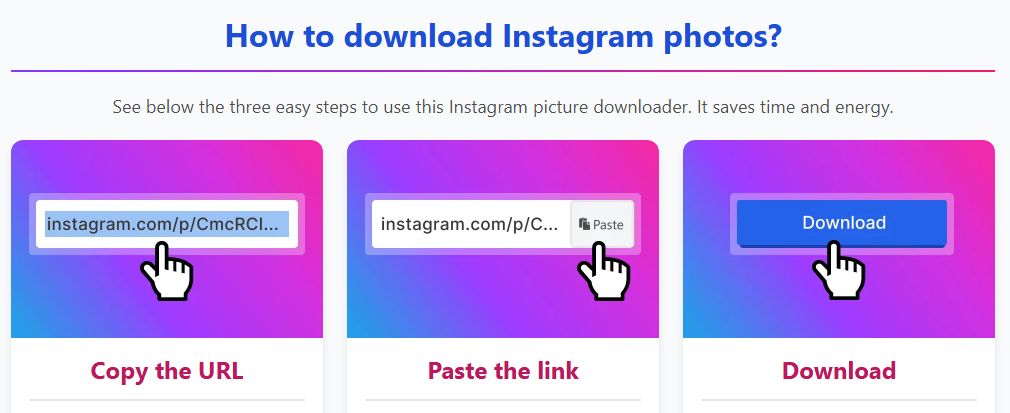
By fastdl's own account the whole method fits in three cards, and the sample link on them is an Instagram post address.
Neither site's terms change who owns a photo. They say whom the tool was built for.
DownReels lists its promises under the Download Photo button, No Watermark and No Login Required among them. Just above them sits the line "By downloading, you agree to our Fair Use Policy".
The paperwork that turns a folder into a library
Whatever fills the folder, paper makes it a library. Under section 30 an owner grants rights "by licence in writing", and section 30A applies the rules of section 19 to licences: signed, naming the work, and specifying "the rights assigned and the duration and territorial extent".
The defaults catch licences that leave things out.
Leave out the period and section 19(5) fills it in: "deemed to be five years". Leave out the territory and section 19(6) presumes it "to extend within India". Section 19(4) adds a clock: rights unused for one year are deemed to have lapsed, "unless otherwise specified". A brand stockpiling creator images for a future campaign should read that twice.
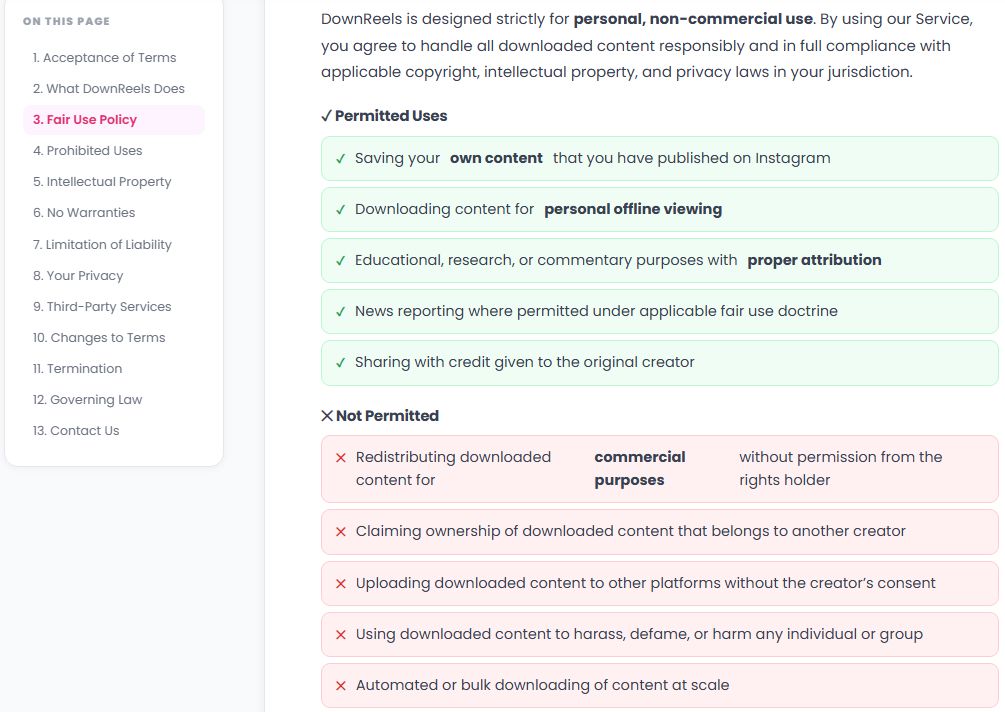
Section three of DownReels' terms. Saving your own published content is permitted; redistributing downloaded content for commercial purposes without the rights holder's permission is not.
None of this is legal advice; it is what the sections say. For pile one, pull the agency contract. For pile two, get a written licence naming the photos, uses, period and territory before a creator's shot goes into an ad. The downloader fills the folder. The licence makes it an asset.
The Rule of Thumb
If the brand owns the photo or holds a written licence and it ends on a screen, the Instagram copy will do. If it ends on paper, ask whoever took it for the original. If it ends in a paid ad, get the licence signed before the file moves.
Insights Focus is a marketing initiative for sponsored posts. No VCCircle journalist was involved in the creation of this content.