India’s family offices today have access to a much wider range of investment choices, from direct equities and mutual funds to ETFs, alternative investment funds and global opportunities. But a larger opportunity set does not necessarily create a better portfolio.
For family offices, the more important question is how these investments fit together, particularly when a significant share of the family’s wealth may already be concentrated in the operating business that created it.
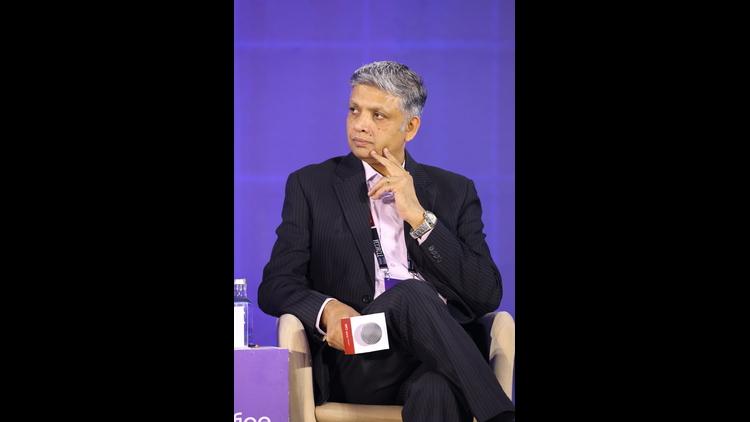
Speaking at the VCCircle Family Office Summit 2026, Dheeraj Gaur, Executive Vice President, Choice Wealth Pvt. Ltd., discussed how family offices can approach portfolio construction more holistically. He highlighted the importance of looking beyond individual products to understand liquidity, concentration, costs, overlap and the different sources from which a family generates its returns.
Start With the Portfolio, Not the Product
For family offices evaluating public-market investments, discussions can quickly become focused on vehicles such as direct equities, mutual funds, ETFs or actively managed strategies.
Mr. Gaur argued that the choice of vehicle should follow a broader assessment of the family’s existing portfolio.
Products that appear different may still create exposure to similar underlying risks. Portfolio construction therefore begins with understanding what the family already owns and what an additional investment is expected to contribute.
Costs Matter, But So Does Liquidity
ETFs can be attractive because of their relatively low costs, but Mr. Gaur cautioned against looking only at headline expense ratios. “We do believe that costs matter because they compound over a period of time,” he said.
However, liquidity can create additional costs. “In less-liquid ETFs, the bid-ask spread can be the biggest killer. If you look only at the TERs and compare them, you’re not looking at the whole picture,” Mr. Gaur said.
The issue can become more pronounced during volatile periods. For family offices deploying larger pools of capital, total cost therefore includes not only fees but also liquidity, transaction costs and execution.
The Family Business Is Part of the Portfolio
Mr. Gaur also highlighted an exposure that can sometimes be overlooked when families review their investments: their own operating business. Many promoter families continue to hold substantial stakes in the companies that created their wealth. This concentration should influence how the rest of the portfolio is constructed.
“In every such family’s portfolio, that is the most illiquid position in the public market that they have, their own business that they are operating in, which they cannot sell,” Mr. Gaur said. If the operating business is already heavily exposed to one sector, geography or economic cycle, adding financial investments with similar characteristics may increase concentration. A family office therefore needs to consider operating wealth and investment wealth together rather than viewing the financial portfolio in isolation.
Diversification Should Not Dilute Conviction
The growing number of investment products has made it easy for family office portfolios to accumulate multiple funds and strategies. But Mr. Gaur cautioned that diversification can go too far.
For families, the objective should therefore not be to spread capital across as many investments as possible. Areas where the family has greater understanding or stronger conviction may justify a higher allocation, provided the underlying risks are understood. He also pointed out that simply owning several funds does not necessarily amount to diversification.
The relevant question is not how many funds a family owns, but how much overlap exists between them and whether those investments genuinely provide different sources of return. “It’s not about buying a bit of everything, but it’s about de-risking your return streams,” Mr. Gaur said.
Active and Passive Have Different Roles
Mr. Gaur also drew a distinction between where passive investing may work effectively and where active management can potentially add greater value. He pointed to the underperformance of many actively managed large-cap funds relative to their benchmarks and the growth of passive investing in developed markets.
“We’ve seen in the US as well, passives have actually outgrown the actively managed funds there. That is going to happen here as well,” he said. However, he sees a different case in mid and small-cap investing, where price discovery is still evolving and active managers may have more opportunity to generate excess returns.
“When it comes to mid and small caps, I think that is where the discovery is still happening,” he said. He added that in such areas, investors may be justified in paying for active management if it can genuinely generate additional returns. The active-versus-passive decision, therefore, need not be uniform across the portfolio. It can depend on where active management has a stronger chance of justifying its cost.
Diversify Across Sources of Return
Mr. Gaur said family offices can also look beyond conventional domestic equities when seeking different sources of return. “Those instruments could also be global instruments. It could be quasi-debt, quasi-equity, where the underlying security is a very different security than what you already hold in your portfolios,” he said.
Global allocations can reduce dependence on one market, while debt and hybrid instruments can introduce different risk and return characteristics. However, every additional investment should still be assessed against the family’s existing exposures. The objective is not diversification for its own sake. It is to ensure that different investments genuinely contribute different return streams rather than reproducing the same risks in different forms.
Build Around the Family’s Actual Balance Sheet
For family offices, public-market investing cannot be separated from the rest of the family’s wealth. A promoter whose largest asset remains the operating company has a different risk profile from a family that has sold its business and converted most of its wealth into financial assets. Portfolio construction therefore needs to begin with the family’s actual balance sheet, including the operating business, financial investments, liquidity requirements, currency exposure and concentration risks.
Mr. Gaur’s broader point was that family offices should not confuse the number of products in a portfolio with genuine diversification. A resilient portfolio is one in which each allocation serves a purpose, overlap is understood, costs are considered in full and different investments contribute distinct sources of return.
For family offices navigating increasingly sophisticated public markets, that discipline can be critical to preserving and compounding wealth over the long term.
NOTE: This article has been developed by the VCCEdge Research Team for Choice Wealth Pvt. Ltd.