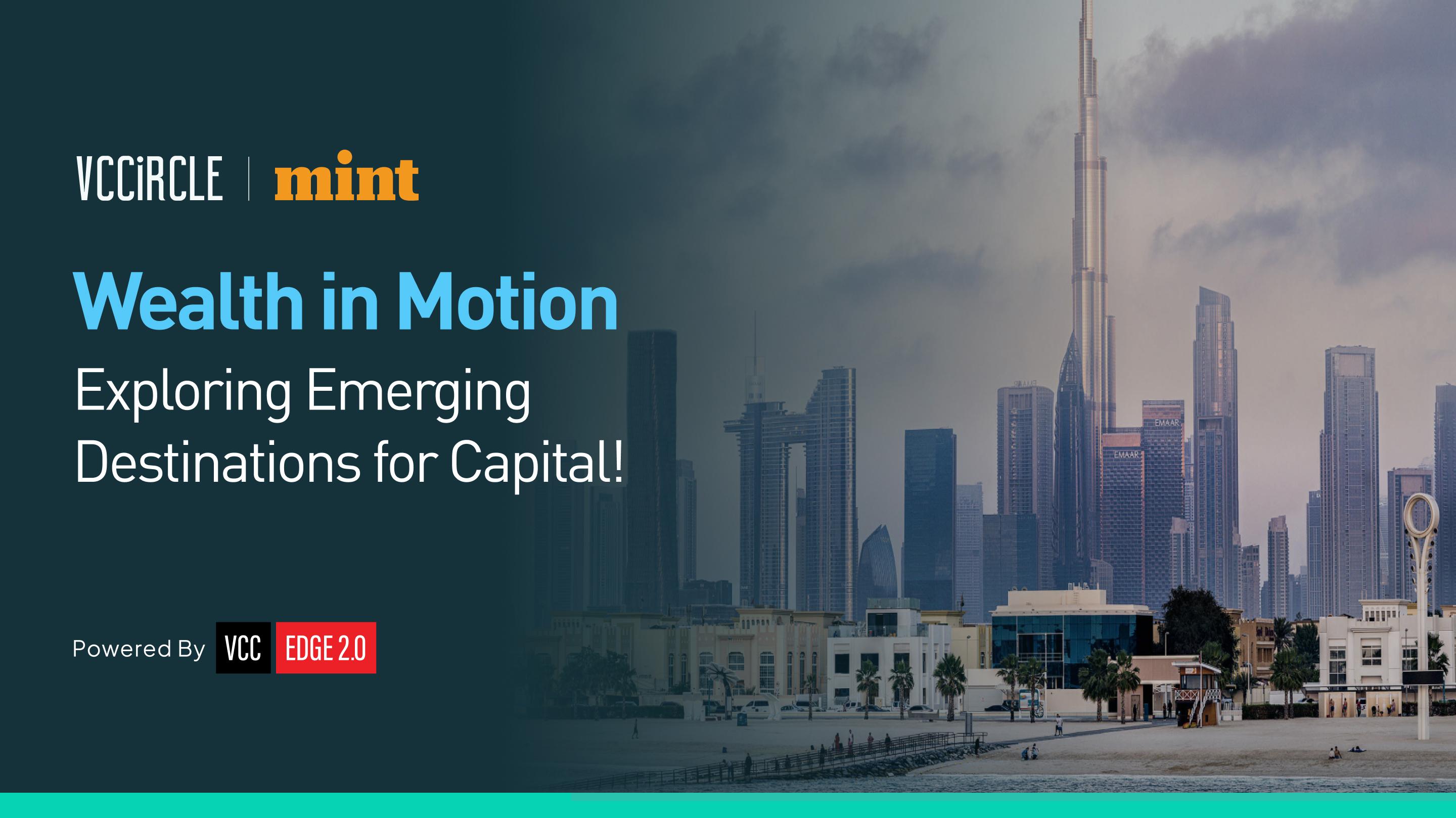
As millionaire migration reaches record levels, new residency patterns are emerging, driven by evolving strategies around capital continuity, governance, and long-term economic alignment.
A Global Reframing of Wealth Migration
In 2025, around 142,000 millionaires are projected to relocate internationally, up from approximately 134,000 in 2024, per the Henley & Partners Private Wealth Migration Report 2025. This movement is driven by changing perceptions of taxation, governance, and long-term residency value.
Among the countries expected to experience the largest net inflow of millionaires in 2025, the United Arab Emirates (UAE) stands out - set to gain 9,800 new millionaires this year alone, the highest globally. Dubai, home to 81,200 millionaires - with a growth rate of 102% and 237 centi-millionaires (individuals with over USD 100 million in wealth), is poised to be a key destination for this influx of global wealth.
| Country | Millionaire Migration - 2025 (Expected) | Estimated Wealth of Migrating Millionaires (USD billion) | Millionaire Growth % (2014 - 2024 |
| UAE | +9,800 | 63.0 | 98% |
| USA | +7,500 | 43.7 | 78% |
| Italy | +3,600 | 20.7 | 20% |
| Switzerland | +3,000 | 16.8 | 28% |
| Saudi Arabi | +2,400 | 18.4 | 55% |
Source: Henley & Partners Private Wealth Migration Report 2025
Jurisdictions once favoured solely for tax efficiency are now being reassessed through a broader lens - where governance, deep talent pools, legal reliability, mobility pathways, and lifestyle infrastructure play growing roles in wealth relocation decisions.
What’s Driving the Shift in Wealth Migration
Wealth relocation today is shaped as much by risk management as by opportunity. While the numbers show where capital is flowing, understanding why it moves is equally critical. Rising geopolitical uncertainty, tightening tax regimes, and increasing regulatory complexity in traditional financial centres are prompting high-net-worth individuals to reassess their base jurisdictions.
According to Knight Frank’s Wealth Report 2024,19% of UHNWIs are actively considering a second residency or citizenship. The European Lifestyle Report 2024, based on a survey of 750 HNWIs across 11 European countries, further clarifies the motivations behind such moves - with security, employment opportunities, and taxation ranking as the top three factors influencing relocation decisions.
As a result, jurisdictions offering stability, long-term residency pathways, and institutional trust - rather than short-term incentives - are increasingly preferred by globally mobile families seeking to preserve and grow wealth across generations.
Is Dubai Gaining Traction Among Global Elites?
Change in Wealth Residency Patterns
Forecasts suggest that if Dubai attracts even 5% of the projected migrating millionaires in 2025, it could see a net inflow of around 7,100 high-net-worth individuals, representing an estimated AED 26 billion (USD 7.1 billion) in new capital inflow.
A Policy Environment Built for Continuity
Dubai’s economic direction is guided by the Dubai Economic Agenda (D33) - a 10-year (2023-2033) blueprint to double the Emirate’s GDP and elevate it into the world’s top three urban economies. Beyond macro goals, the agenda emphasizes institutional continuity, economic diversification, and digital governance, aligning closely with what mobile wealth seekers are looking for: predictability in a volatile world.
In recognition of its digital leadership, Dubai was recently ranked 4th globally in the IMD Smart City Index 2025, making it the highest-ranked city in the GCC, Arab region, and Asia - with resident satisfaction scores above 84% across key services such as health, e‑governance, internet speed, and public transport.
Ease of Doing Business as a Foundational Advantage
Dubai’s business setup landscape continues to evolve into a high-efficiency, digitally integrated ecosystem. In Q1 2025 alone, over 19,000 new commercial licences were issued in Dubai, representing 59% of all business licences across the UAE, and signaling robust market confidence and ease of entry for investors. The Invest in Dubai platform serves as a single-window digital service that allows investors to complete commercial licensing, approvals, payments, and renewals through a unified online interface.
A key advancement under the D33 is the Dubai Unified Licence initiative. The initiative assigns every business a unique identification number and QR code, whether it operates in the mainland or a free zone, creating a unified business identity across the emirate. This system simplifies data access for government departments, banks, utilities, and service providers, and makes processes like bank account opening and licence updates more seamless.
Supporting innovation further, during Q1 2025, the Dubai Chamber of Digital Economy helped launch and expand 127 digital startups, a 135% increase from the previous year, underscoring government support for entrepreneurship and streamlined access to capital and infrastructure.
Financial Services and Advisory Growth
By the end of H1 2025, 440 firms involved in wealth and asset management were operating in Dubai’s financial ecosystem, including approximately 85 hedge funds, reflecting a notable increase in fund-related activity. According to the Dubai International Financial Centre (DIFC) half-yearly results, the number of family-owned business entities grew by 73% compared to H1 2024, while foundations registered in the centre rose by 54%, reaching a total of 842.
These activities fall under the purview of multiple regulatory authorities operating in Dubai, including the Dubai Financial Services Authority (DFSA) for entities within DIFC, and the Securities and Commodities Authority (SCA) and Dubai Courts for broader mainland operations.
Property and Physical Settlement Assets
CBRE data shows that Dubai’s residential real estate sales reached AED 434 billion in 2024, marking a 33% increase over the previous year. The city recorded close to 181,000 transactions, reflecting a sustained rise in demand.
Within the luxury segment, ultra-high-net-worth buyers (net worth above USD 20 million) accounted for approximately USD 4.4 billion in residential property purchases in 2024, marking a 76% increase year-on-year, according to Knight Frank’s Destination Dubai 2024 report. Separately, Knight Frank’s Wealth Report 2025 notes that luxury home prices in Dubai rose by 147% between 2019 and 2024, making it the fastest-growing prime residential market globally during that period.
Recent market data suggests that villa sales activity in Dubai rose by 65% year-on-year in early 2025, with transaction values reaching approximately AED 53.4 billion, according to Provident Estate. For the full year, around 19,700 new luxury villas are expected to be delivered, based on estimates from DXB Interact. However, supply at the upper end of the market remains relatively constrained.
This evolving supply-demand dynamic may be influencing how luxury real estate in Dubai is viewed as part of broader wealth migration and capital allocation strategies.
Lifestyle, Talent, and Safety as Strategic Drivers
Dubai’s appeal to globally mobile wealth increasingly hinges on its integration of quality of life, talent access, long-term residency infrastructure, and personal security.
Over 220 private schools operate across the city, offering 17 international curricula, with more than 84% of students attending institutions rated ‘Good’ or better by Knowledge and Human Development Authority (KHDA). Healthcare access is equally robust, with over 3,900 facilities, including 50+ hospitals and 600+ clinics, while the city attracted 691,000 medical tourists in 2023, generating AED 1.03 billion in revenue, according to Dubai Health Authority (DHA).
Safety and stability are central to Dubai’s overall appeal. The UAE was ranked the safest country in the world in Numbeo’s 2025 mid-year Safety Index, with a score of 85.2, ahead of more than 160 countries globally. Within the country, Dubai ranked 3rd globally among cities with a safety score of 83.8, reflecting consistently low crime rates and high levels of resident trust in public safety.
Coupled with world-class education and healthcare systems, Dubai’s long-term visa options for investors, entrepreneurs, and highly skilled professionals reinforce the city’s role as a place where families can build both lasting wealth and meaningful personal roots.
Looking Ahead: Building Relevance for the Next Generation
As wealth strategies evolve to prioritise resilience, long-term visibility, and multi-generational planning, Dubai is positioning itself not just as a wealth hub - but as a jurisdiction that can adapt alongside its residents. Its continued investments in regulation, infrastructure, and talent signal a long game: one focused on permanence, not just presence.
Rather than competing solely on tax efficiency or ease of doing business, Dubai is now being evaluated for the depth of its legal frameworks, the maturity of its financial services, and its capacity to serve as a stable base amid global uncertainty. For a growing number of families and institutions, the question is shifting - from where wealth can be held to where it can be grown, safeguarded, and lived meaningfully.
No VCCircle journalist was involved in the creation/production of this content.