India’s financial system is showing two divergent realities today. Banks are reporting their healthiest balance sheets in decades, with gross NPAs down to 2.3% in FY25. However, parts of the retail credit engine are showing strain. Education finance, a relatively small segment by size but one with critical social impact, is fast becoming one of the most visible pressure points.
The segment’s importance goes well beyond its size. Education loans are socially vital products that widen access to higher studies, but they are also structurally riskier than secured retail categories such as housing or auto loans. System-wide data underscores this vulnerability: the RBI’s Financial Stability Report (2024) placed NPAs in education loans at 3.6%, the highest among personal loan products.
At the same time, portfolio-level data tells a very different story. NBFCs, which account for the bulk of student lending, reported gross NPAs of just 0.1% as of March 2025, and 0.7% after adjusting for moratoriums, according to CRISIL. However, the gap between these numbers is less about resilience and more about timing. Nearly 85% of the NBFC education loan book remains under contractual principal moratoriums, deferring repayments and delaying stress recognition. With only 15% of loans set to exit moratorium in FY26, repayment capacity will face its most decisive test in years.
The anatomy of a slowdown
Growth momentum in education finance is fading. NBFCs delivered extraordinary expansion in the recent past, with education loan AUM surging 77% in FY24 and 48% in FY25. However, forecasts for FY26 are far more subdued. Growth is expected to halve to around 25%, taking the education loan book from Rs 64,000 crore to about Rs 80,000 crore. What was once among the fastest-growing retail credit categories is now entering a phase of structural recalibration.
The deceleration is the sharpest in overseas education loans, historically the main growth driver. Disbursements to the US fell by nearly 30% in FY25, driven by fewer visa appointments, uncertainty around the Optional Practical Training (OPT) programme, and tighter post-study work policies. Canada has also introduced stricter rules, with proof-of-funds requirements and student visa caps, further dampening demand.
The impact is visible at the state level. In Gujarat, for example, the number of students availing education loans rose by only 2.7% in FY25, while total disbursements grew just 6.5%, sharply below the double-digit growth of earlier years. Nationwide, disbursement growth slipped to 8% in FY25 from 50% in FY24, as students deferred plans, switched destinations, or recalibrated affordability.
Lenders have responded by diversifying portfolios geographically. The UK, Germany, Ireland, and smaller European destinations have reportedly doubled their share of disbursements, from 25% in FY24 to about 50% in FY25. This pivot reduces dependence on North America but comes with trade-offs: smaller ticket sizes, thinner margins, and uncertain post-study employment pathways. Domestic adjacencies such as loans for schools, certification, and coaching are being added, but these, too, cannot match the heft of overseas lending.
In short, the growth that once appeared structural is now hostage to immigration policy abroad. This is not a cyclical pause; it is a systemic reshaping of the education finance market.
Hidden risks beneath the surface
The apparent resilience of education loan portfolios today reflects accounting lag more than real-time repayment strength. With the bulk of loans still in moratorium, the true state of credit quality remains obscured. If overseas job markets fail to absorb graduating students, or if currency depreciation erodes household repayment capacity, defaults could rise quickly from a deceptively low base.
India’s recovery framework offers limited comfort. While the Insolvency and Bankruptcy Code has delivered over Rs 3.96 lakh crore in aggregate recoveries across corporate loans as of June 2025, retail loan resolution remains fragmented and slow. Globally, recovery rates on distressed retail loans average 30-40% under flexible regimes such as the US Chapter 11 system. India’s more regulated framework struggles with both volume and judicial timelines. For lenders, disciplined provisioning in the education loan book is not optional, it is existential.
The risk is not only financial but also reputational. Education loans are aspirational products, enabling upward mobility for millions of families. A surge in defaults could quickly escalate into a political flashpoint, inviting scrutiny and regulatory interventions that reshape business models for years to come.
Reimagining the future of education finance
The slowdown, however, does not spell decline. India’s demographic dividend ensures a steady stream of students aspiring for global degrees. The challenge for lenders is not demand, but durability.
This calls for reimagining the playbook. Underwriting must move beyond generic credit scores to employability-linked assessments. A loan for a master’s degree in computer science from a top-tier university carries a vastly different repayment profile than one for a niche course at an unranked institution. So pricing and credit models need to reflect those differences. Repayment structures, too, need to align with job realities. Graduated EMIs, income-linked repayment models, and interest-only periods can smooth transitions and reduce slippages. These are not concessions but prudent risk management tools.
Technology is already reshaping education finance and will be central to this shift. AI-driven underwriting enables lenders to evaluate employability data at scale, while digital-first collections can flag stress signals before loans slip into delinquency. Partnerships with universities, skill providers, and employers are improving both origination and repayment outcomes. Increasingly, lenders are also backing domestic skill-linked pathways such as certification courses, micro-credentials, and blended learning programs. These initiatives not only hedge against volatility in overseas markets but also strengthen employability outcomes at home.
Regulators and policymakers, too, will play a critical role. Targeted loan guarantees, transparent outcome reporting, and structured support for moratorium exits can help stabilize the ecosystem. At the same time, lenders must resist the temptation to chase volumes without pricing volatility into their books.
Ultimately, the real test for the industry will be to manage moratorium exits with discipline, provisions ahead of stress, and design credit products around employability rather than enrolment. Education finance is no longer a niche segment; it is the proving ground for how India manages retail credit risk in an age of aspiration and uncertainty. Those who master this transition will not only withstand today’s slowdown but also shape the next chapter of the consumer finance story.
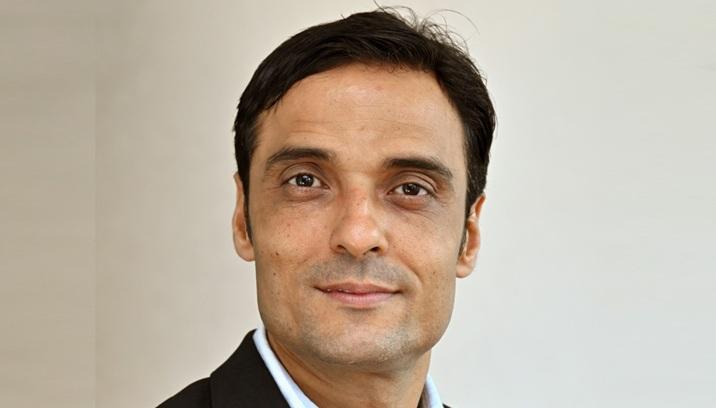
Navin Kanjwani is executive director, Areion Fincap Pvt Ltd. Views are personal.